In the ever-evolving landscape of industrial design and process engineering, accuracy and efficiency in documentation are paramount. Piping and Instrumentation Diagrams (PIDs) serve as crucial references in the design, operation, and maintenance of process plants. However, the process of annotating these diagrams can be tedious and error-prone. To address this challenge, we are excited to introduce PID Annotator, a customized tool derived from the VGG Image Annotator, available for free on the PlantFCE website.
Try PID Annotator for free.
Understanding Piping and Instrumentation Diagrams (PIDs)
PIDs are comprehensive graphical representations of the physical and functional relationships between piping, equipment, instrumentation, and control systems within a process plant. They provide detailed information regarding the operational aspects of the plant, making them essential for engineers, operators, and maintenance personnel.
Annotating PIDs involves adding relevant information, such as component specifications, process flow details, and safety protocols. However, traditional methods of annotation can be cumbersome and inefficient, leading to potential miscommunications and errors. This is where PID Annotator comes into play.
What is PID Annotator?
PID Annotator is a user-friendly, web-based tool designed specifically for annotating PIDs. Built on the robust framework of VGG Image Annotator , it retains the essential features that users appreciate while introducing specialized functionalities for PID annotation. Key features include:
-
Custom Annotation Types: PID Annotator supports various annotation types tailored for PIDs, such as bounding boxes for components, polygons for complex shapes, and text labels for specifications and notes.
-
Intuitive User Interface: The interface is designed to be user-friendly, allowing engineers and designers to annotate diagrams efficiently without requiring extensive training.
-
Data Export Options: Users can export annotations in multiple formats, including JSON and CSV, facilitating easy integration with other tools and workflows in PlantFCE.
-
Offline Functionality: PID Annotator can be downloaded and run locally, providing users with the flexibility to work in environments with limited internet connectivity.
-
Open-Source Foundation: As an open-source tool, PID Annotator encourages collaboration and continuous improvement, allowing users to customize it further to fit their specific needs.
Why Choose PID Annotator?
The need for an efficient PID annotation tool has never been more pressing. Here are several reasons why PID Annotator stands out:
-
Enhanced Accuracy: By providing a structured approach to annotation, PID Annotator minimizes the risk of errors associated with manual input. This ensures that the information captured in PIDs is accurate and reliable.
-
Improved Efficiency: The intuitive interface and custom annotation options significantly speed up the annotation process, allowing engineers to focus on what they do best—design and optimize processes.
-
Seamless Integration with PlantFCE: PID Annotator is fully integrated into the PlantFCE suite, which includes a range of tools for cost estimation and project management. This integration enables users to leverage PID annotations for various applications, including material take-off (MTO), requisition processes, and cost estimation.
-
Support for Collaboration: With its export options and open-source nature, PID Annotator supports collaborative efforts among teams, ensuring that everyone has access to the most up-to-date information and annotations.
The Role of PlantFCE in Cost Estimation
PlantFCE is a comprehensive suite of tools designed to streamline the cost estimation process for process plants. It encompasses a range of functionalities, including:
-
Document Parsing: Automatically extracting relevant information from documents to facilitate quick and accurate cost estimation.
-
Basic Modeling: Creating simplified models of processes to help visualize costs and resource allocation.
-
Auto Routing: Streamlining the routing of materials and resources within a project to minimize delays and inefficiencies.
-
Material Take-Off (MTO): Generating lists of materials required for a project, ensuring accurate budgeting and procurement.
-
Requisition and Cost Basis: Using public and private data sources to establish a reliable cost basis for projects, enhancing decision-making.
-
Automated Workflows and Audit Trails: Maintaining consistency and accountability through automated workflows that track changes and decisions throughout the project lifecycle.
The integration of PID Annotator into the PlantFCE ecosystem enriches this suite of tools, allowing users to annotate PIDs and leverage that information for various cost estimation and project management functions.
How PID Annotator Works
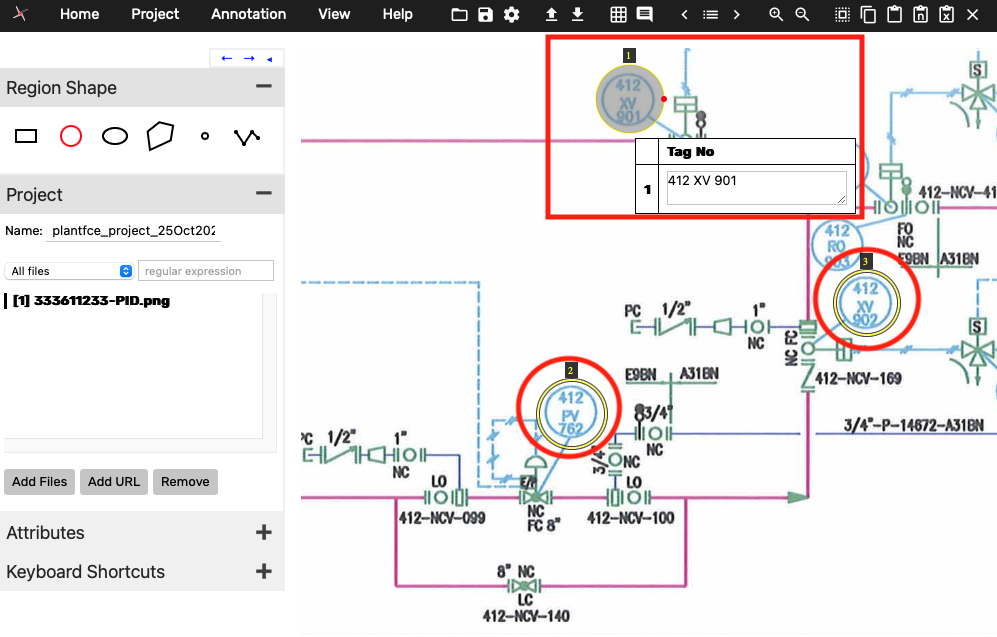
Getting started with PID Annotator is straightforward:
-
Accessing the Tool: Users can access PID Annotator directly from the PlantFCE website. The tool is available for free, encouraging widespread use within the industry.
-
Uploading PIDs: Users can upload their PIDs in various image formats. The tool supports high-resolution images to ensure clarity during annotation.
-
Annotating Diagrams: Using the customizable annotation tools, users can add bounding boxes, polygons, and text labels to their PIDs. This enables them to specify component details, process flows, and other critical information.
-
Exporting Annotations: Once the annotation process is complete, users can export their work in the desired format, ready to be integrated into their projects within PlantFCE.
-
Ongoing Support and Updates: As an open-source tool, PID Annotator will continue to receive updates and improvements based on user feedback and evolving industry needs.
Try PID Annotator for free.
Future Development and Community Engagement
PID Annotator is not just a standalone tool; it represents a commitment to enhancing the overall efficiency and accuracy of process plant design and operation. We encourage users to engage with the PID Annotator community by providing feedback, contributing to its development, and sharing use cases that demonstrate its impact on their projects.
Future developments may include advanced features such as:
-
Machine Learning Integration: Implementing machine learning algorithms to assist in automated annotation based on historical data and patterns.
-
Enhanced Collaboration Features: Introducing real-time collaboration tools that allow multiple users to annotate and edit diagrams simultaneously.
-
Customizable Workflows: Allowing organizations to define their own annotation workflows to better fit their operational processes.
Conclusion
PID Annotator is set to revolutionize the way professionals interact with PIDs, making the annotation process more efficient, accurate, and user-friendly. By leveraging this powerful tool within the PlantFCE ecosystem, users can streamline their workflows and enhance their cost estimation processes.
As we embark on this journey, we invite you to explore PID Annotator on the PlantFCE website, take advantage of its features, and join us in shaping the future of PID annotation. Together, we can elevate the standards of documentation and project management in the process engineering industry.
Stay tuned for updates and new features as we continue to develop PID Annotator into an indispensable tool for all your PID annotation needs!